Español
 Polski
 Greek
 Italiano
 Turkish
 简体中文
 English


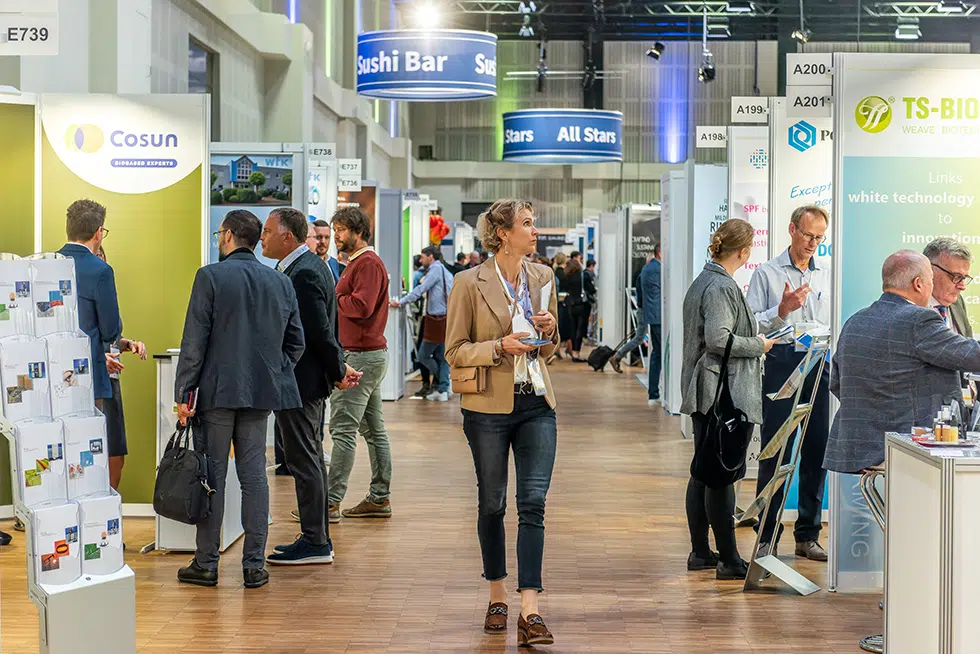
Before travelling to Berlin for SEPAWA, I spent some time in Türkiye visiting customers and looking around supermarkets in Istanbul.
For me, these two settings offer complementary perspectives. Trade shows reveal the technologies and directions suppliers want to develop. Supermarket shelves show what has actually reached consumers. Looking at both helps put industry developments into context.
Domestic brands have clearly established a substantial presence in Türkiye’s dishwasher capsule market. In ŞOK stores, Asprax occupied a considerable amount of shelf space, while Bingo had achieved broad distribution in larger supermarkets. Based on the retail presence I saw and my conversations in the market, my assessment is that Bingo has become Türkiye’s leading dishwasher capsule brand, supported by its strong brand recognition and distribution network.
It was another reminder of how quickly branding and distribution can accelerate sales once manufacturing capability is in place.
Beyaz experienced serious production quality problems earlier on, including numerous complaints about leaking capsules. The products I saw on shelves this time featured new colours and fragrances. With equipment placing limits on flexibility in product shape, colour and fragrance become relatively accessible ways to differentiate. For capsules, however, repeat purchases still depend first on consistent quality.
Renax has maintained a steady position. ETAP’s brand marketing capabilities are less developed than those of Hayat and Beyaz, but Renax has remained consistent and is also making progress in Central Asian export markets. Different companies are building their positions through different strengths: some expand rapidly through branding and distribution, while others grow through reliable products and delivery.
After arriving in Berlin, I also visited local supermarkets. Finish remained prominent, alongside several supermarket private labels. Among the dishwasher capsules I saw, a common configuration was one powder chamber combined with two or three liquid chambers.
The comparison was interesting. Most relevant manufacturers in Türkiye already have the capability to produce dual-powder dishwasher capsules, yet this architecture was not widely reflected in the mainstream products I saw on German shelves.
Of course, shelf formats alone cannot represent a market’s full technical capabilities. Updating established products involves costs, supply chains, consumer familiarity and existing production assets. Still, Turkish manufacturers appear well positioned in terms of readiness for dual-powder production. Manufacturing capabilities in an emerging market can sometimes advance faster than the product range on shelves in a mature one.
When I entered SEPAWA on 14 October, the main areas of innovation I noticed were enzymes, polymers and formulation systems for low-temperature washing.
These developments share a practical objective: achieving effective cleaning at lower temperatures, with smaller doses or under more demanding conditions. They are particularly relevant to pods, where the space available for each dose is limited. Combining active ingredients within that space, and enabling them to work under the right conditions, remains a central development challenge.
Sustainability was also a major theme. However, this year’s conversations suggested that competition and broader economic pressures were making customers more cost conscious. There seemed to be limited enthusiasm for greener solutions that came with a substantial price premium.
My impression is that wider adoption depends on delivering performance, convenience and affordability together. A solution that reduces transport, packaging and energy requirements while remaining easy and economical to use has a much stronger chance of moving from an exhibition concept into everyday purchasing.
During the exhibition, I caught up with longstanding contacts at Persan and McBride to exchange views on products and equipment. I also spoke with BASF and Novonesis about dual-powder architectures and the implications of dosing enzymes directly into pods.
This was one of the topics that interested me most.
A dual-powder architecture changes much more than the number of chambers. It creates opportunities to separate ingredients that previously had to share the same formulation environment. It also opens up different ways to use ingredients that face limitations in liquid systems.
When enzymes can be dosed independently in a suitable form, and bleaching systems and other functional ingredients can be organised separately, the starting point for formulation design changes. Raw material form, storage stability, dosing methods, chamber allocation, dissolution and performance during washing all need to be considered together.
Some compromises previously accepted within a formulation may become avoidable through changes in pod architecture and manufacturing methods. This is why I increasingly see equipment, film, formulation and product structure as closely connected parts of development.
After the exhibition, I travelled home via Milan. Visiting supermarkets along the way again highlighted a contrast in European living costs that I find difficult to reconcile.
Many everyday supermarket products were reasonably priced. Yet an approximately seven-kilometre taxi journey from the airport to the hotel cost €85, which still felt remarkably expensive. Industrially manufactured goods and local services seem to operate within very different cost structures.
In Italian supermarkets, pods also continued to carry a noticeable price premium over other product formats. Although they are already widely available, there is still room to improve their affordability and value before they become an everyday choice for a broader group of consumers.
From the expansion of domestic brands in Türkiye, to established products on European shelves, to the ingredients and technologies presented at SEPAWA, this trip strengthened one of my views: pods will continue to become more affordable while expanding the range of formulations and functions they can deliver.
As manufacturing efficiency improves, ingredient combinations develop and product architectures mature, pods have the potential to become a more widely accessible way of delivering active ingredients.
For those of us developing and manufacturing these products, the work ahead is concrete: turn technical possibilities into products that are reliable, convenient and reasonably priced. Consumers choosing to buy them—and choosing to buy them again—will be the real measure of whether these innovations succeed.